Manufacturing in the region is growing fast. Saudi Vision 2030, the UAE's Operation 300bn and Egypt's push for local industry all encourage factories to produce more locally, and procurement rules increasingly reward local content. Growth exposes weak systems: raw material shortages that stop lines, cost spreadsheets that are months out of date, and quality records on paper. Odoo gives mid-sized manufacturers one system from raw material purchase to finished goods invoice.
FlexCode Middle East is part of FlexCode Systems GmbH, an Odoo Silver Partner. We implement Odoo, so Odoo is the system we describe, next to an honest look at the topic itself.
Key points
- Plan from demand. Sales orders and forecasts drive production and purchasing.
- Materials on time. Lead times and reordering rules prevent line stoppages.
- Real product cost. Actual materials, machine time and labour per order.
- Quality on record. Checks, alerts and traceability for audits and customers.
Make to stock or make to order
| Model | Typical products | In Odoo |
|---|---|---|
| Make to stock | Food, packaging, chemicals, building materials | Reordering rules and Master Production Schedule |
| Make to order | Steel structures, furniture, machinery, signage | Sales order creates the manufacturing order |
| Configure to order | Panels, doors, cabinets with options | Product variants and configurable BoMs |
| Contract manufacturing | Private label, toll manufacturing | Customer owned materials and subcontracting |
Raw materials and imports
Many factories in the region import key raw materials such as resins, steel coils, chemicals or packaging film, with lead times of six to twelve weeks. Odoo plans these purchases from the production schedule and vendor lead times, tracks shipments, and adds freight and customs to material cost through landed costs. Safety stock on critical items protects the line from late containers.
Read purchasing in Odoo and landed costs.
Planning and the shop floor
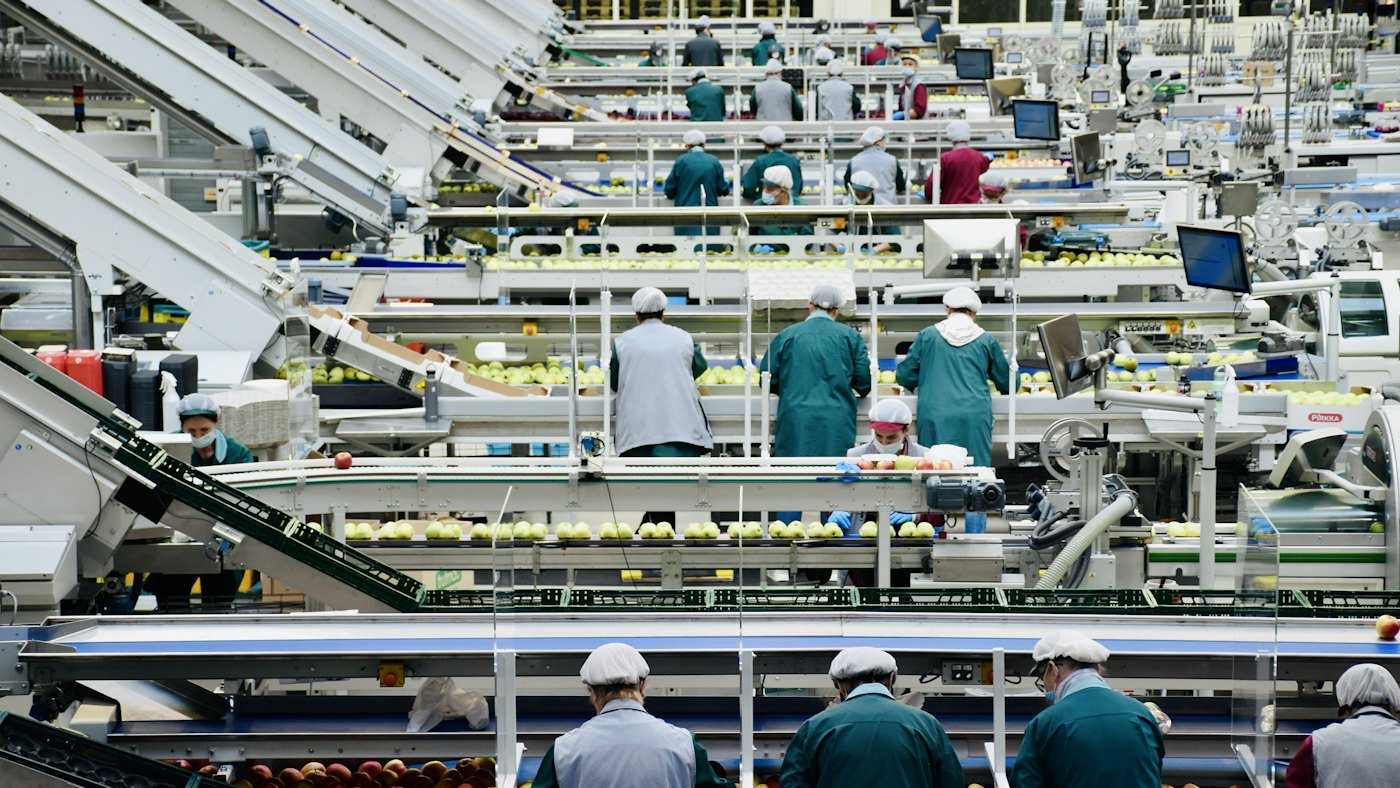
Planners schedule manufacturing orders against work centre capacity, and operators run work orders from tablets on the shop floor, recording start and end times, scrap and quality checks. Supervisors see in real time which orders are late and which machines are idle. Preventive maintenance keeps equipment available, and downtime is recorded against the work centre.
- Demand: orders and forecast
- Master Production Schedule
- Materials purchased
- Work orders on the floor
- Quality checks
- Finished goods shipped
The building blocks are explained in Odoo Manufacturing basics and Odoo Maintenance.
Costing and margins
Every manufacturing order in Odoo carries its actual cost: components at their inventory value, machine hours at the work centre rate and labour time. Comparing actual with standard cost each month shows which products lose money when raw material prices rise, so sales can adjust prices before the year end surprises everyone.
Per order
Actual material and labour
Monthly
Actual versus standard review
6 to 12
Weeks lead time on imported inputs
Per batch
Traceability for recalls
Valuation methods are in inventory valuation in Odoo.
Quality, local content and compliance
Customers and regulators expect evidence: quality checks with results, batch traceability, certificates of conformity, and in Saudi Arabia, local content figures for government and Aramco tenders. Because Odoo records where every material came from and what each product contains, it can supply the data behind local content calculations, even though the official certification is done with the relevant authority.
- Define quality control points for incoming materials and finished goods.
- Track lots from raw material to customer delivery.
- Record country of origin on purchased materials.
- Keep certificates attached to products and lots.
Local content rules and calculation methods are set by the Local Content and Government Procurement Authority in Saudi Arabia. Check the current methodology before preparing a tender.
Batch tracking is explained in lots, serial numbers and expiry dates; food factories should also read Odoo for food and beverage companies.
FlexCode implements Odoo for factories
We model your products and routings, set up planning, shop floor and quality, connect costing to accounting and train planners, operators and finance.
Frequently asked questions
Is Odoo suitable for manufacturers?
Yes, for discrete and batch manufacturers of small to medium size, from planning to costing and quality.
Does Odoo support make to order?
Yes. A confirmed sales order can create the manufacturing order and material purchases.
Can Odoo help with local content?
It records origins and costs that feed local content calculations; certification is with the authority.
Can operators use tablets?
Yes, with the Shop Floor app for work orders, scrap and quality checks.
How long does implementation take?
Typically four to eight months depending on product complexity and integrations.
Talk to us about how Odoo fits your business. Book a free call
Run invoicing, stock and accounts from one system.
FlexCode Middle East implements Odoo in Arabic and English for companies in Egypt, Saudi Arabia and the UAE.